


Interior Waterproofing
INTERIOR WATERPROOFING
A QUICK OVERVIEW
Interior waterproofing is a method used to manage water that seeps into a building’s foundation from the inside. This process begins by carefully demolishing the floor adjacent to the foundation walls to create a narrow trench. Into this trench, weeping tiles—perforated pipes designed to collect water—are installed. After that, a special membrane is put directly on the foundation wall. This membrane helps guide any water that penetrates the wall down towards the weeping tiles. The collected water then flows through the tiles into a sump pump basin, where it is safely pumped out and away from the home. Once the project is finished, the demolished floor is repoured with new concete, thus covering both the membrane and the weeping tiles.
It’s important to understand that interior waterproofing doesn’t stop water from entering the foundation walls; instead, it redirects the water once it arrives. This helps prevent flooding and reduces the risk of long-term water damage inside the building, making it a crucial step in maintaining a dry and healthy basement environment.

When is interior waterproofing the preffered option?

Project price: Interior waterproofing typically costs less than exterior waterproofing. Because of this, choosing interior waterproofing can be a more budget-friendly way to protect your property from water damage.
Landscaping: Exterior waterproofing generally requires anything adjacent to the foundation wall to be temporarily or even permanently removed. As a result, any landscaping, concrete, interlocking, decks and vegetation have to be removed and then later reinstalled. This ultimately leads to more expenses for the homeowner.
Spacial Limitations: In case if the house that needs to be waterproofed is
built too close to a neighbouring building, lack of space makes exterior waterproofing impossible. Such a scenario allows only interior waterproofing to be performed.
Additional Factors: Each home is unique, reflecting the homeowner's choices and the building’s characteristics. For an example, newer houses with poured concrete foundations and unfinished basements are ideal candidates for interior waterproofing. Since these homes haven’t undergone renovations yet, the interior foundation walls remain exposed, offering a perfect chance to apply interior waterproofing measures. The durable nature of new poured concrete means the foundation won’t degrade for a long time, making more expensive exterior waterproofing oversufficient in most cases.
Although exterior foundation waterproofing is highly effective, there are many cases where interior waterproofing is the preferred—or sometimes outright the only option available for protecting a basement. This might be due to site conditions, existing landscaping, budget constraints, or structural limitations that make exterior access difficult or impossible. Interior waterproofing methods focus on managing water that has already entered the basement, often by redirecting it away from the foundation through drainage systems and sump pumps.
While exterior waterproofing works by preventing water from reaching the foundation in the first place, interior solutions provide a practical alternative when digging outside the foundation walls isn’t feasible. Understanding when each method is appropriate helps homeowners choose the best strategy to keep their basements dry and protected.

Disadvantages of a basement that has not been waterproofed
Every homeowner who has dealt with moisture, dampness, and mold in their basement has likely wondered: How serious is a leaky basement? What impact does water have on my house? Are there hidden risks for both my health and the overall soundness of my home? If these concerns sound familiar, you're not alone—these questions are completely reasonable and understandable for anyone facing water problems in their basement.

If left unwaterproofed, the hollow nature of cinder block leads to
water accumulating in different parts of the basement, even if water is coming through in one specific area.

Houses built on fieldstone foundations are very old and the basement area inside these houses was never intended to be used as living space. As such, they were built without proper foundation drainage and are usually saturated with moisture after all this time. Pinpointing where exactly water is coming in the basement is essentially impossible when it comes to fieldstone, and usually, at least one wall (if not the entire house) needs to be waterproofed entirely.

Mold, "flaking" and white chalky substance left after water evaporation are all common signs of a brick foundation that is in need of waterproofing.

Despite being arguably the most reliable out of the four foundation types, poured concrete can still suffer from foundation cracks after the building settles. This is usually the main reason when it comes to water damage inside the basement, the other reason being clogged weeping tiles. Even poured concrete foundations need both reliable waterproofing treatment and proper drainage for a dry environment inside the basement.
Here are some important things to consider as a homeowner with a basement that has water damage:

Water seepage causes dampness, which in turn leads to mold and mildew growth. Mold can be harmful and poses health risks by triggering allergies and respiratory issues.
Excess moisture can often result in unpleasant odors, making the living space inside the basement area less comfortable or possibly even unsuitable.
Constant, ongoing water infiltration can weaken the building foundation over time, affecting the structural integrity of the house and resulting in costly repairs.
(This can be resolved ONLY by doing exterior waterproofing of the foundation).
A permanently wet basement can attract pests such as insects and rodents, creating additional headaches for the homeowner.
Failing to properly waterproof a property can significantly reduce its market value and diminish its attractiveness to potential buyers.
Electrical systems and appliances located in a damp basement are also at risk of damage or malfunction.
To effectively resolve the above mentioned issues, basement waterproofing is absolutely essential. Protect your home’s foundation by entrusting our experienced team with your basement waterproofing needs. As experts, we will ensure your basement remains dry and secure, strengthening your home’s overall stability and preventing costly damage from moisture. Don’t wait for problems to worsen—take action now and fortify your foundation.
Interior Waterproofing: How Does it Work?
Previously, we covered all the steps involved in exterior waterproofing in detail. Now, let's take a closer look at how interior waterproofing works, step by step. Unlike exterior waterproofing, which seals the foundation to prevent groundwater from entering, interior waterproofing focuses on managing water that has already penetrated the foundation. Its purpose is to redirect this water away, helping to protect your basements interior from potential damage.

1.Following an on-site inspection, we will determine the exact source of the basement leak. Identifying the
origin of the water is essential, as it impacts the choice of the most effective waterproofing solution and
influences the overall cost of repairs.

2. If the basement is finished and functions as living space, all items—including furniture and personal
belongings—must be moved before starting the project. The existing drywall will need to be taken down,
and after the waterproofing work is finished, new drywall can be installed to complete the space again.


3.Once the furniture has been cleared away and the drywall removed from the walls, interior waterproofing can
begin. The first task after these preparations is to break up the floor next to the foundation walls. This step
makes it possible to install weeping tiles alongside the footings, which then connect directly to the sump pump
basin.


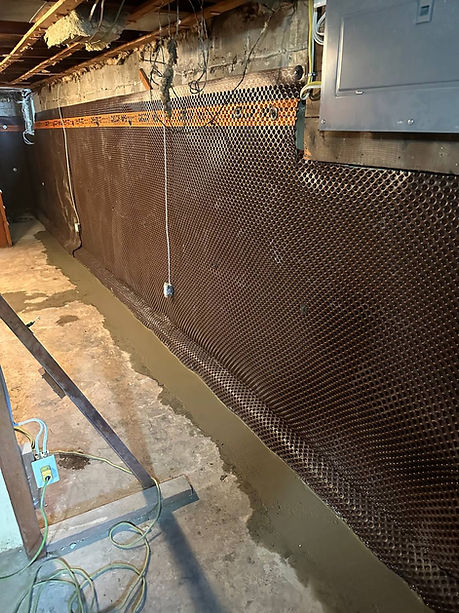
4.After the floor adjacent to the foundation is removed and the weeping tiles are installed, the DELTA-MS
foundation membrane can be applied directly onto the foundation wall. This membrane allows water to travel
down toward the weeping tiles, which then channel it into the sump pump basin. From there, the water is
ejected out through a discharge pipe, keeping the foundation dry and protected from moisture buildup.
.jpg)

5.With the interior waterproofing now finished, the demolished floor can be repoured. Once that’s done, a
thorough cleanup will take place to remove any debris and work-related waste. After finishing these final steps,
the project will be officially complete.
